

Targeted Relief: Understanding Epidural Steroid Injections for Spine Pain
Living with chronic back or neck pain that radiates into your arms or legs can affect every part of your daily routine. Whether it is trouble sleeping, standing, or walking, the discomfort can impact your physical and emotional wellness. For many people in Northern Virginia, epidural steroid injections may offer non-surgical relief from these persistent symptoms.
At DMV Spine and Pain, we provide interventional pain management options such as epidural steroid injections to help reduce nerve-related pain caused by inflammation within the spine. These injections are often recommended when pain stems from inflamed nerve roots, which may occur after a disc injury or as a result of spinal aging.
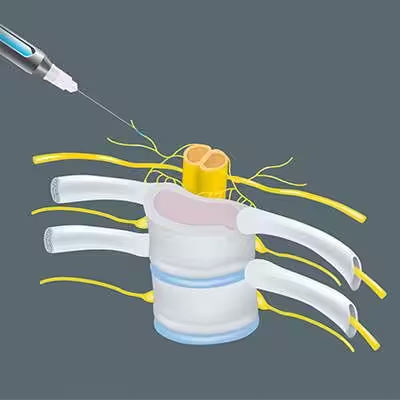
Epidural steroid injections deliver medication into the epidural space. By targeting the inflammation directly, they can help ease pain in the neck, lower back, arms, or legs, depending on which nerves are affected.
Understanding the Epidural Space and Nerve Inflammation
To understand how these injections work, it helps to understand the spinal anatomy. Inside your spinal canal, a layer known as the dura surrounds your spinal cord and nerve roots. The space just outside of this layer is called the epidural space.
When the discs between your vertebrae rupture or bulge, they can press on the spinal nerves and trigger inflammation. Bone spurs from arthritis and structural changes in the spine can also cause irritation. In less common cases, tumors or cysts may place pressure on the nerves, leading to numbness, tingling, or weakness.
When a nerve becomes inflamed, pain typically travels along its pathway. For example, pressure in the lower back can cause pain that radiates into the leg. The goal of an epidural steroid injection is to calm this inflammation and provide meaningful relief.
Benefits and Uses of Epidural Steroid Injections
Epidural steroid injections in Northern Virginia are frequently used for patients who have not found success through conservative treatments like rest, physical therapy, or oral medications. While these injections do not cure the underlying issue, they can help reduce inflammation so that patients can participate more comfortably in physical therapy or avoid surgery.
Patients may consider these injections for a range of conditions such as:
- Lower back pain that radiates to the hips, buttocks, or legs
- Neck pain with symptoms extending into the shoulders or arms
- Radicular pain from herniated discs or spinal stenosis
- Creating a therapeutic window to restore strength and mobility
Procedural Guidance and Safety
Epidural steroid injections are performed on an outpatient basis and typically take less than 30 minutes. The healthcare provider uses imaging guidance, such as fluoroscopy or ultrasound, to ensure the medicine is delivered accurately where inflammation is present.
After cleansing and numbing the injection site, a needle is carefully inserted into the epidural space. A small amount of contrast dye may be used to confirm placement. Once the steroid is injected, the patient is observed briefly before being discharged.
Types of Epidural Steroid Injections
There are three primary types of epidural steroid injections used depending on the patient’s symptoms and anatomical considerations:
1. Interlaminar ESI: Delivers medication between the laminae of the spinal vertebrae to reach the epidural space. Often used in the cervical, thoracic, or lumbar regions.
2. Transforaminal ESI: Targets the area near a specific nerve root as it exits the spinal canal. This approach delivers medication more directly and is commonly used for disc herniations or pinched nerves.
3. Caudal ESI: Administered through the sacral hiatus near the tailbone. This method can be useful when other routes are not viable, especially after previous surgeries or hardware placements.
The choice of technique depends on your history, spinal structure, and location of your pain.
Recovery and What to Expect
After an epidural steroid injection, temporary numbness or a feeling of heaviness in the affected limb is normal and often fades within a few hours. Mild soreness at the injection site can be expected and may be treated with a cold compress.
Relief can occur within a few days, although maximum benefit may take up to a week. Pain relief duration varies, ranging from several days to multiple months. If the outcome is positive, additional injections may be spaced out and integrated thoughtfully into a long-term pain management strategy.
Our Approach at DMV Spine and Pain
At DMV Spine and Pain, personalized care is a priority. You will undergo a comprehensive consultation that includes a review of your imaging, your full health history, and a discussion about your symptoms and goals. Every treatment plan is designed to reflect your unique situation.
We offer epidural steroid injections in Northern Virginia at our Sterling location. Using advanced imaging and proven techniques, our board-certified team ensures safe, effective, and targeted delivery. When conservative therapies have not worked and you are looking to avoid surgery, this option may help you take back control of your life.
If you are suffering from nerve-related back or neck pain, do not wait another day to find relief. Epidural steroid injections in Northern Virginia may be exactly what you need to break the cycle of pain and regain mobility. Contact DMV Spine Pain now and take the first decisive step toward long-term recovery.